Restaurant Point-Of-Sale
1. Project Summary
The product
This tablet-based POS empowers restaurant waiters to work (seat a group, take order, take payments, collect tips, etc.) efficiently, so as to provide great dining experience to guests and increase restaurant sales.
Project Background
US Bank's Merchant Payment Division (Elavon Inc.) builds Point-Of-Sale (POS) solutions to help merchants easily and securely take payments. Before this project, all of our customers came from the retail and service industry, but we have zero presence in the restaurant vertical. So as an attempt to step into the restaurant vertical, a cross-functional team of ~40 people was gathered to design and build this 0->1 product from scratch. I worked as the lead researcher and designer on the team.
My biggest contribution
Led the team to work backwards from end customers and collectively define product strategy, crafted a design vision, and completed design execution including both interaction and visual design.
2. Research - Contextual inquiry
I led my team to conduct contextual inquiries by visiting 8 restaurants. We observed how waiters perform their job under realistic conditions, such as lighting, noise, distraction, crowd. After the observation, we followed up with questions to better understand their processes, what works, and what doesn't. After each session, we synthesized our observations and turned them into insights.
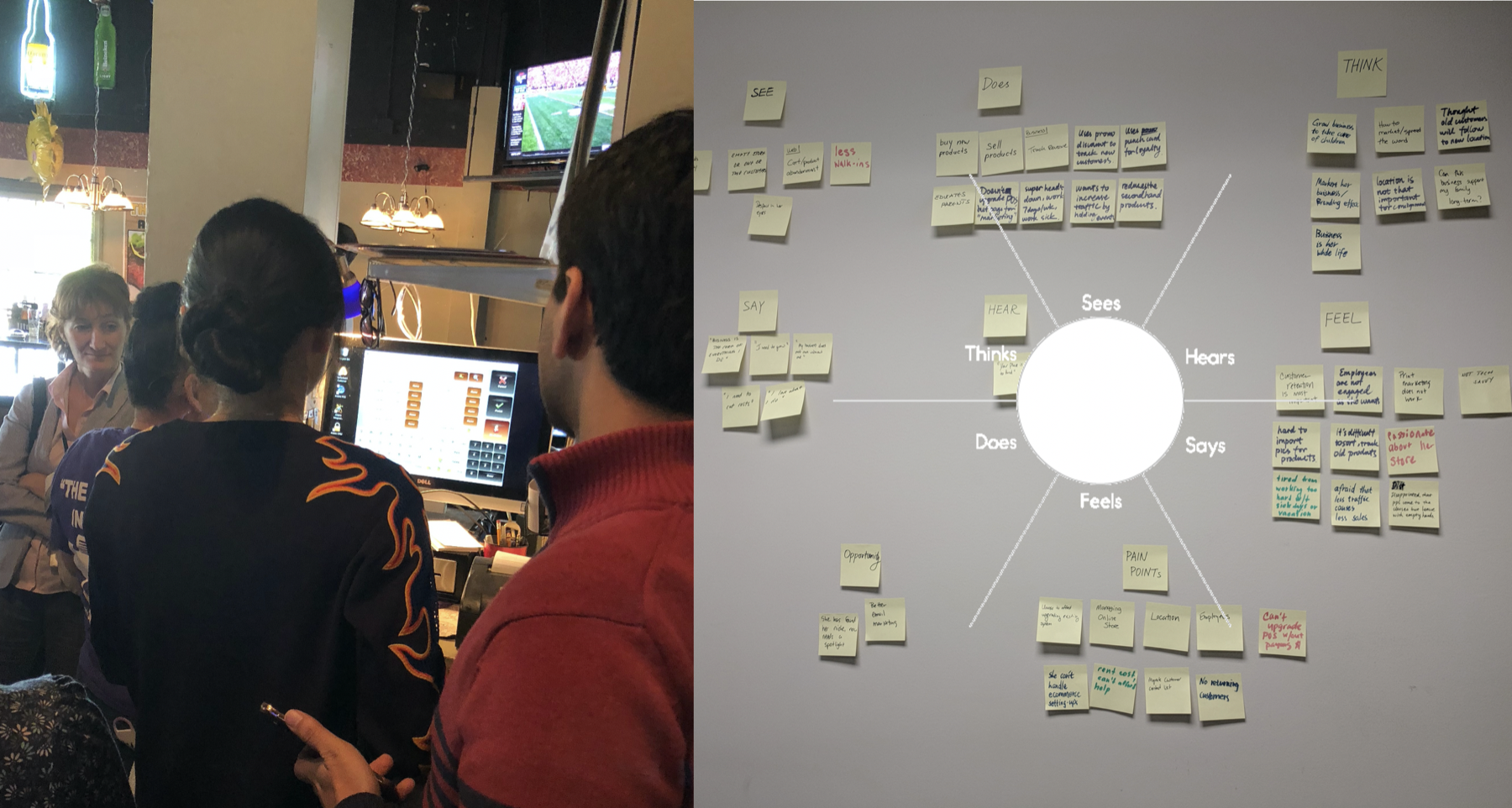
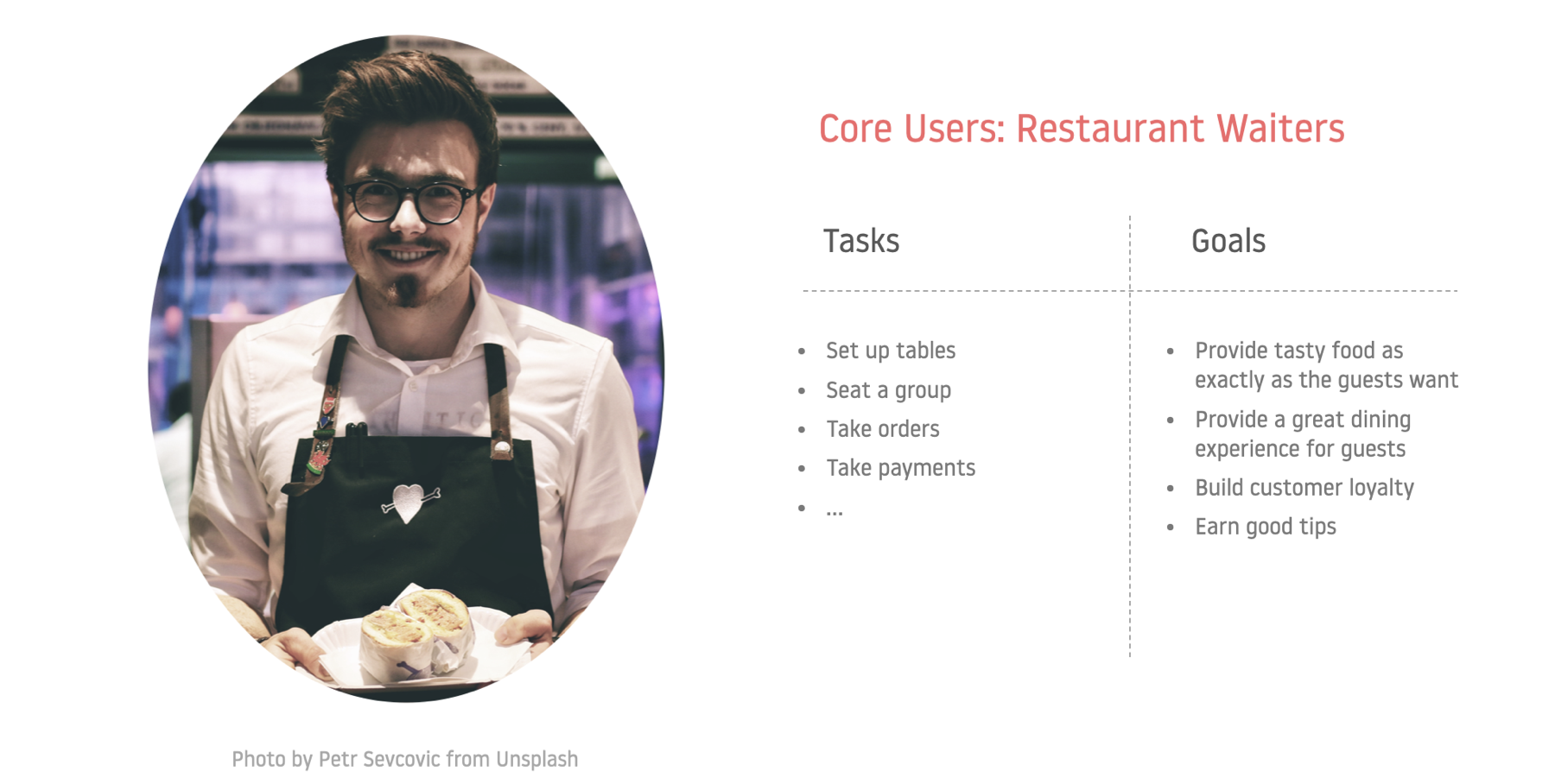
Key Insights and Observations
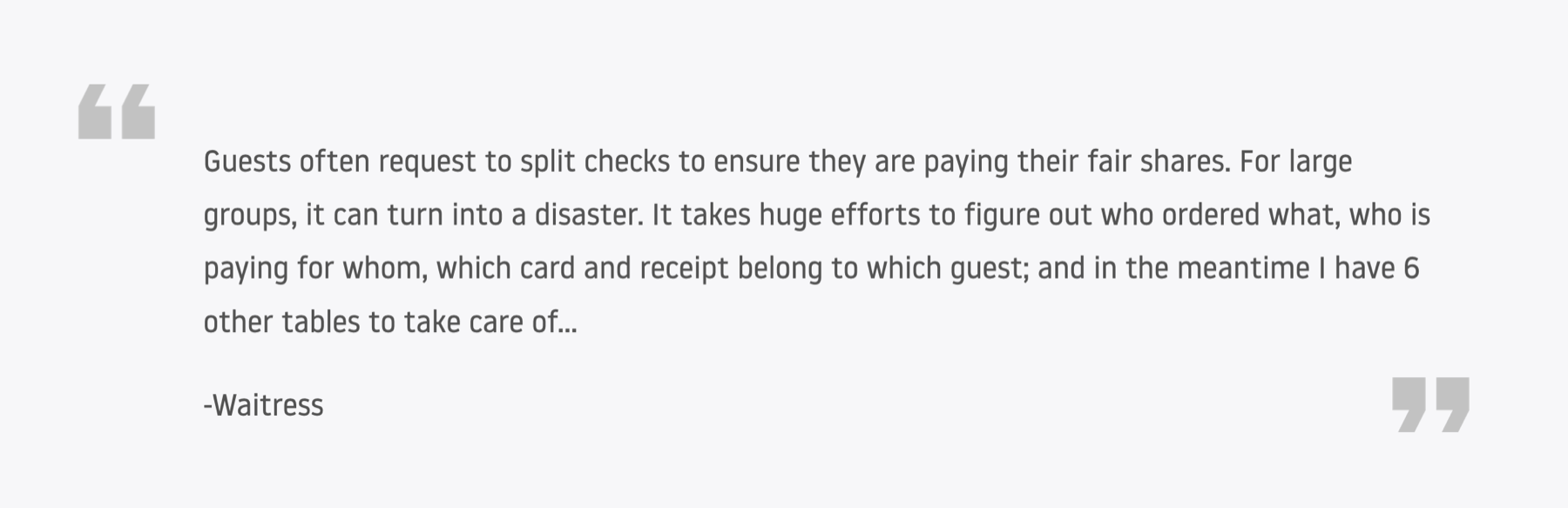
- Waiters need to accurately rememeber which guest orders what: Waiters have to remember what dish each guest orders, their preferences, additional add-ons, etc. They need to bring the right dish to the right guest, and make sure each guest gets the correct bill.
- Guests want flexible payment options: Some guests want to pay for the entire table while other parties want to split the check fairly. Some guests want to pay with credit/debit card, while others prefer to use cash.
- Waiters need a quick way to preseve the system's status when they need to step away, and resume the task when they are back: Because waiters are very likely to be interrupted, maybe a guest is signaling them from a nearby table, so they need to pause whatever they are doing on the POS and step away immediately.
- Waiters need to be able to see and act on each other’s orders: When guests want to order additional food, they may easily flag down any waiter who is passing by.
- Waiters want a portable POS solution so they can place order at the table directly: Lots of restaurants are using fixed stationary POS, so waiters have to take order using paper and pencil at the table, and then go to the counter to type them in to the system. This is inefficient, as details can be lost in the translation and errors can be easily introduced.
3. Research - Competitive Analysis
We also conducted competitive analysis and identified weaknesses and gaps in existing POS solutions on the market.
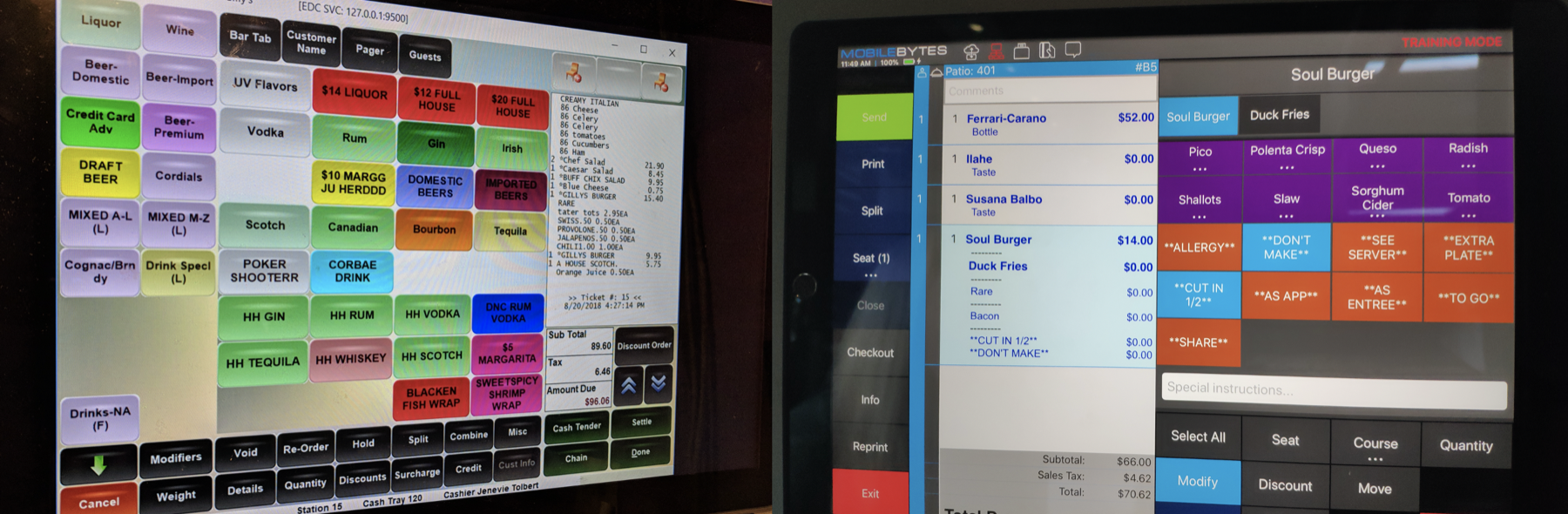
Product Weaknesses & Feature Gaps
- Lack of information hierarchy: Waiters have to remember where each button is, rather than recall.
- Overwhelming choices on screen: Everything is screaming for waiters' attention, it actually takes people longer to make a choic and it's very error-prone.
- Readability and accessibility: The visual style, the color choices, and layout of the UI makes the products hard to read and use.
- No built-in loyalty program: Many restaurant use punch cards as their loyalty program because their POS doesn’t support so.
- Lack of sales insights and reporting capabilities: Restaurants lose the opportunity to leverage the sales insights to improve their busines.
4. Scoping
I facilitated discussions to help my team reach a shared understanding on:
- What does the current customer experience look like and what are the customer pain points?
- How do we envision a better future for our customers when they use our solution?
- What are the problems we have to solve to achieve the outcomes identified in step 2?
- What solutions/features we have to build to solve the problems from step 3?
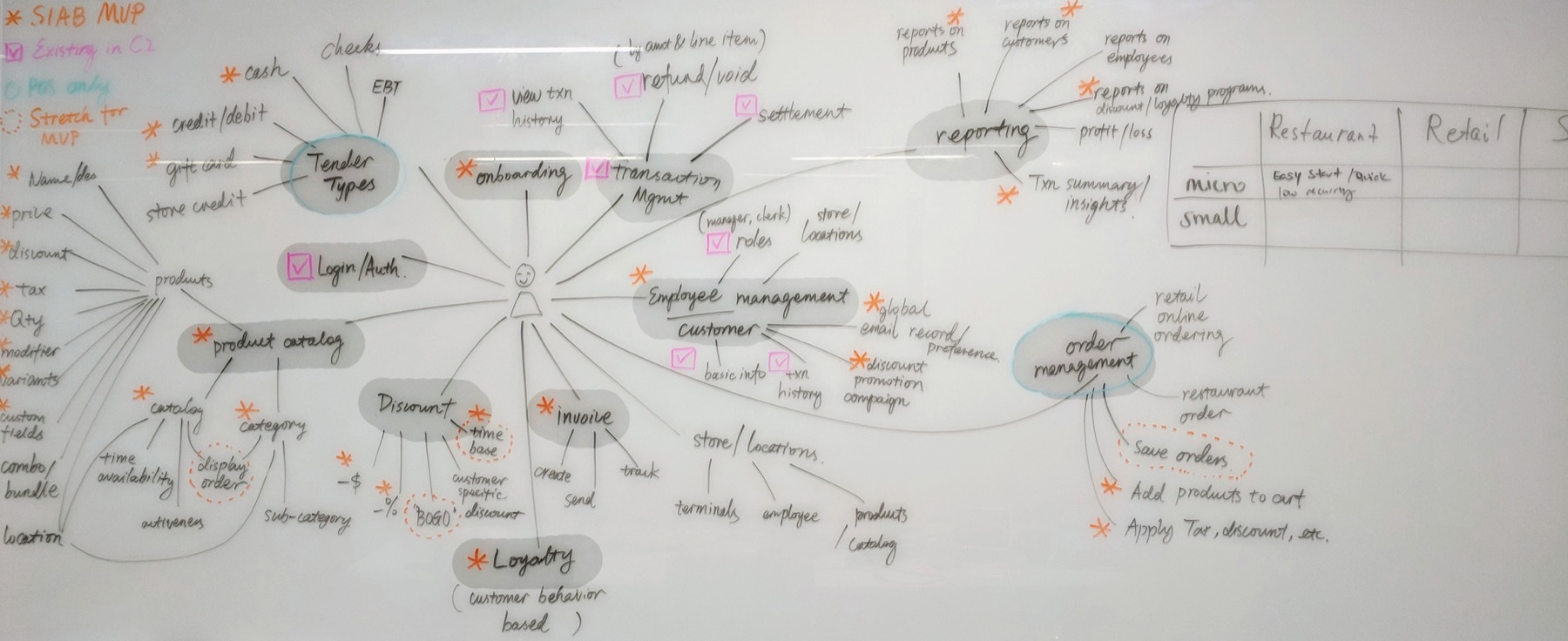
5. User Flow
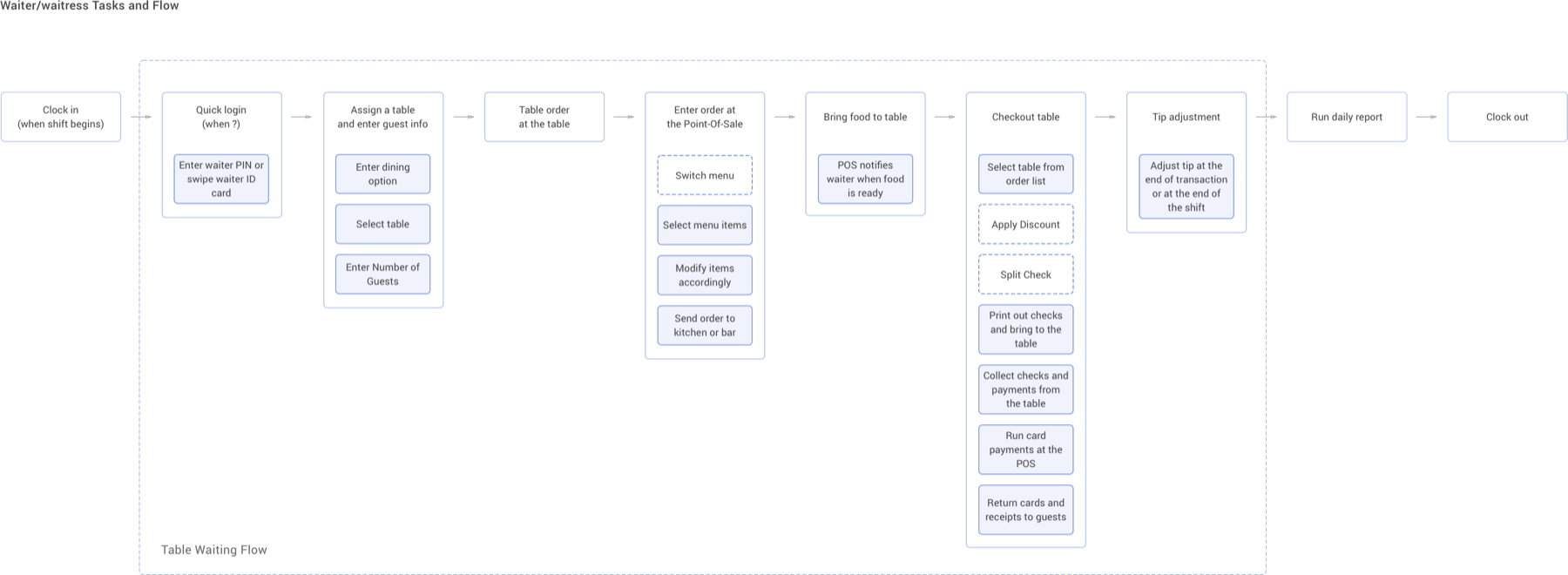
Next, I mapped out all the tasks and actions waiters have to perform to get their job done. This exercise helps me get a holistic view of the end-to-end user flow in a meaningful order, which informed the interaction design later on.
6. Case Study A
In order to build a comprehensive POS solution for restaurant businesses, we have to solve various design challenges in numerous scenarios. Here are two examples:
Design Challenge
How might we enable waiters to easily capture what each guest orders and should be paying for?
Design strategy
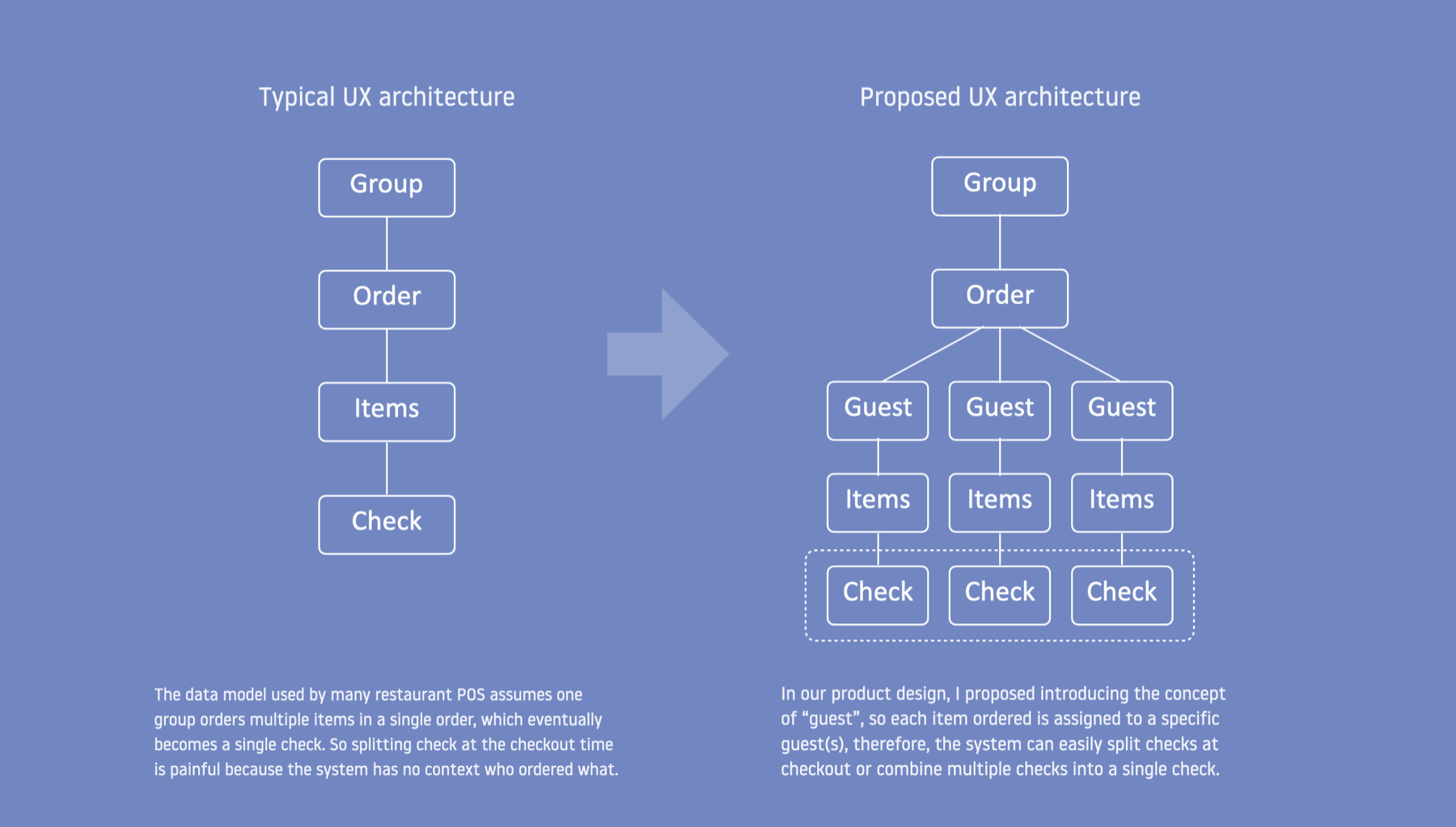
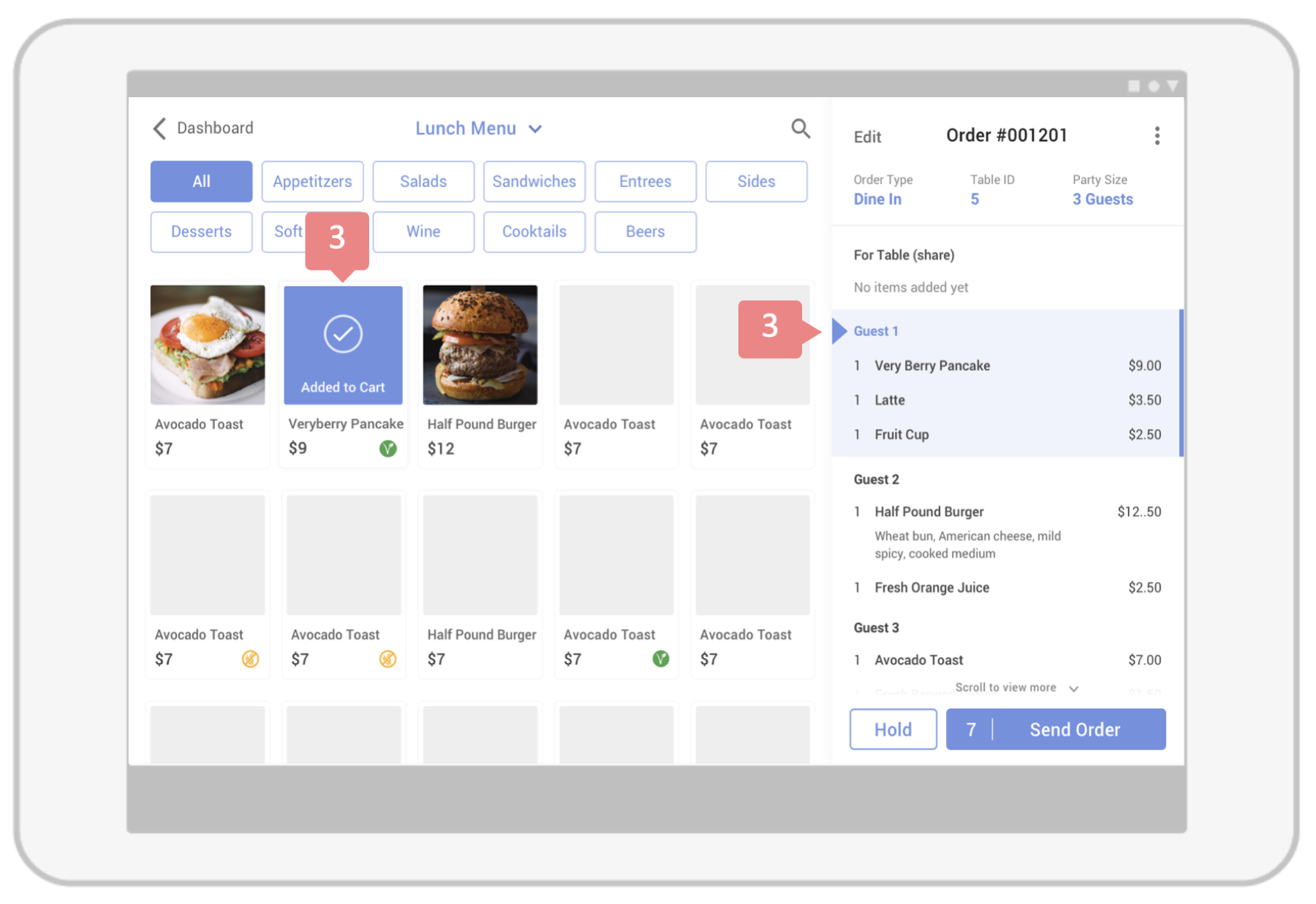
- Remodel concepts and their relationships more accurately. Many traditional restaurant POS solutions allows a single order and check for one group of guests. This 1:1:1 mapping makes splitting checks difficult by nature because the system has no context on who ordered what. While designing our solution, I proposed a different model and introduced the concept of a "guest". So each item ordered is assigned to each guest instead of the group. By doing this, splitting checks or paying together are both made easy.
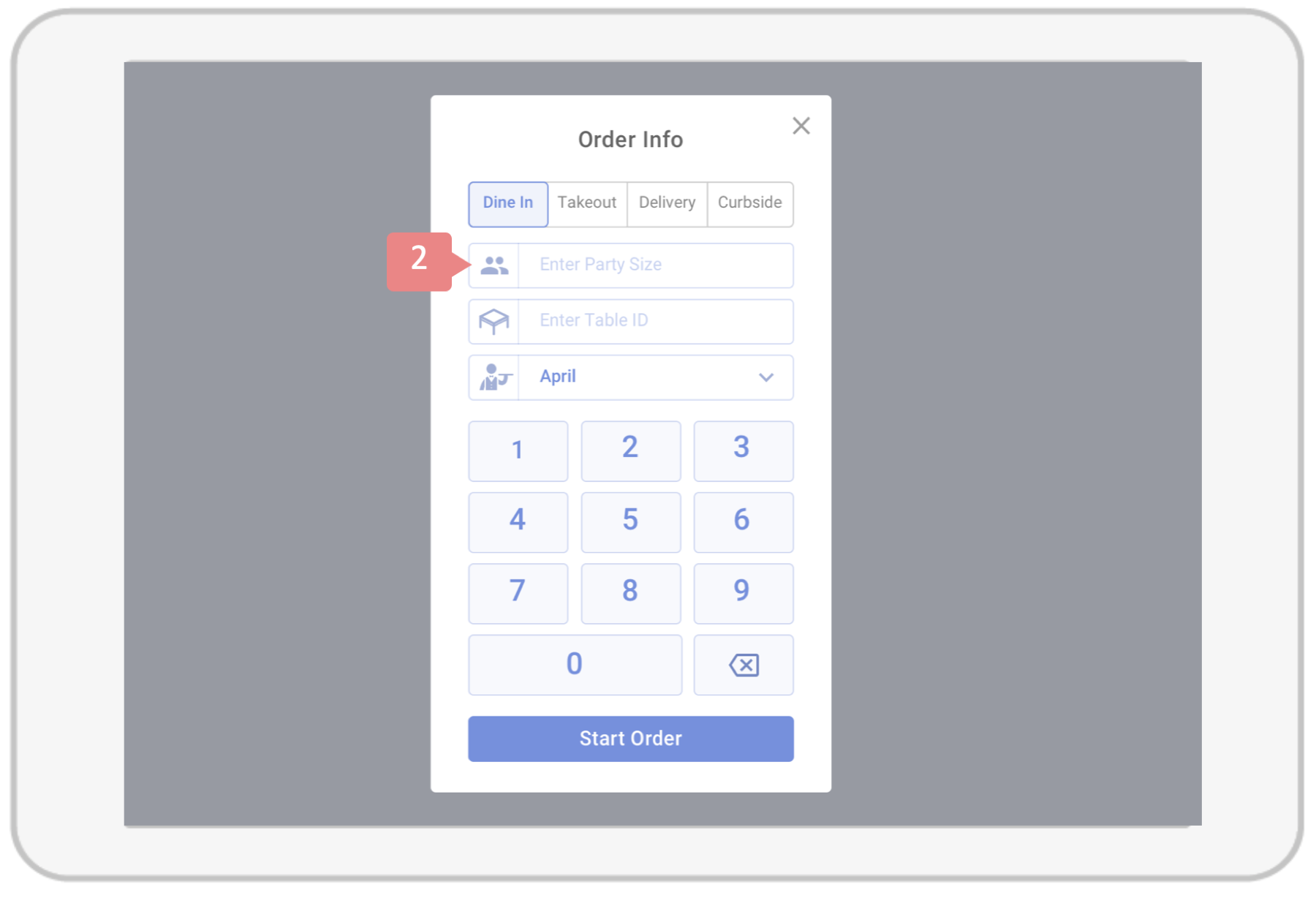
- Capture the size of the party upfront. When waiters start a new order, the POS prompts them to enter party size. Based on this number, the POS will add the right number of guests to the order automatically, and suggest properly-sized table for the waiter to choice from.
- Each item ordered is assigned to a guest. The POS will automatically creates the right number of guests, and items are ordered for guests respectively.
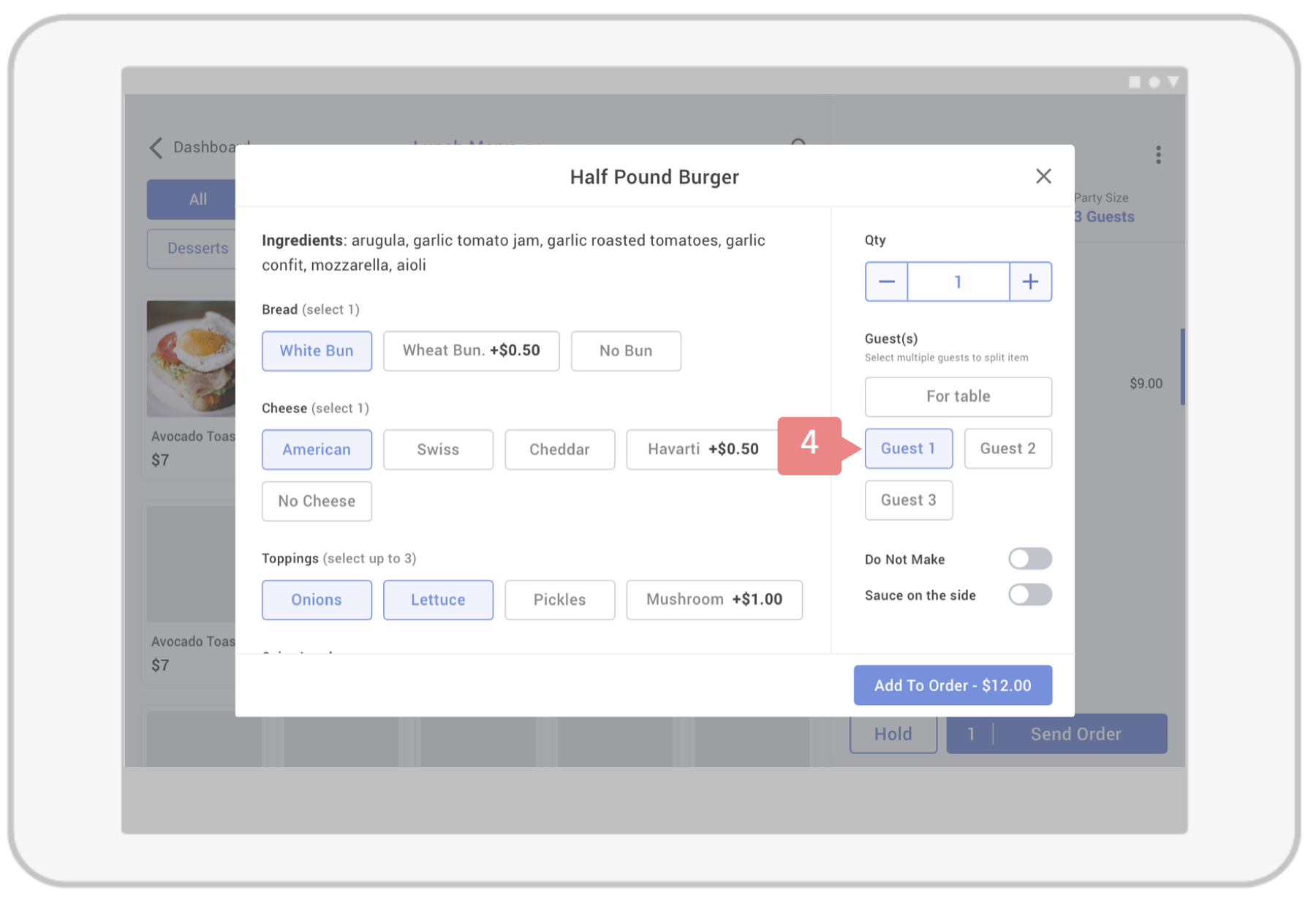
- Splitting an item made possible. Sometimes, two guests want to share an entree or the group want to share an appetizer. Therefore, I added the "share" capability which allows people to share one item among multiple guests.
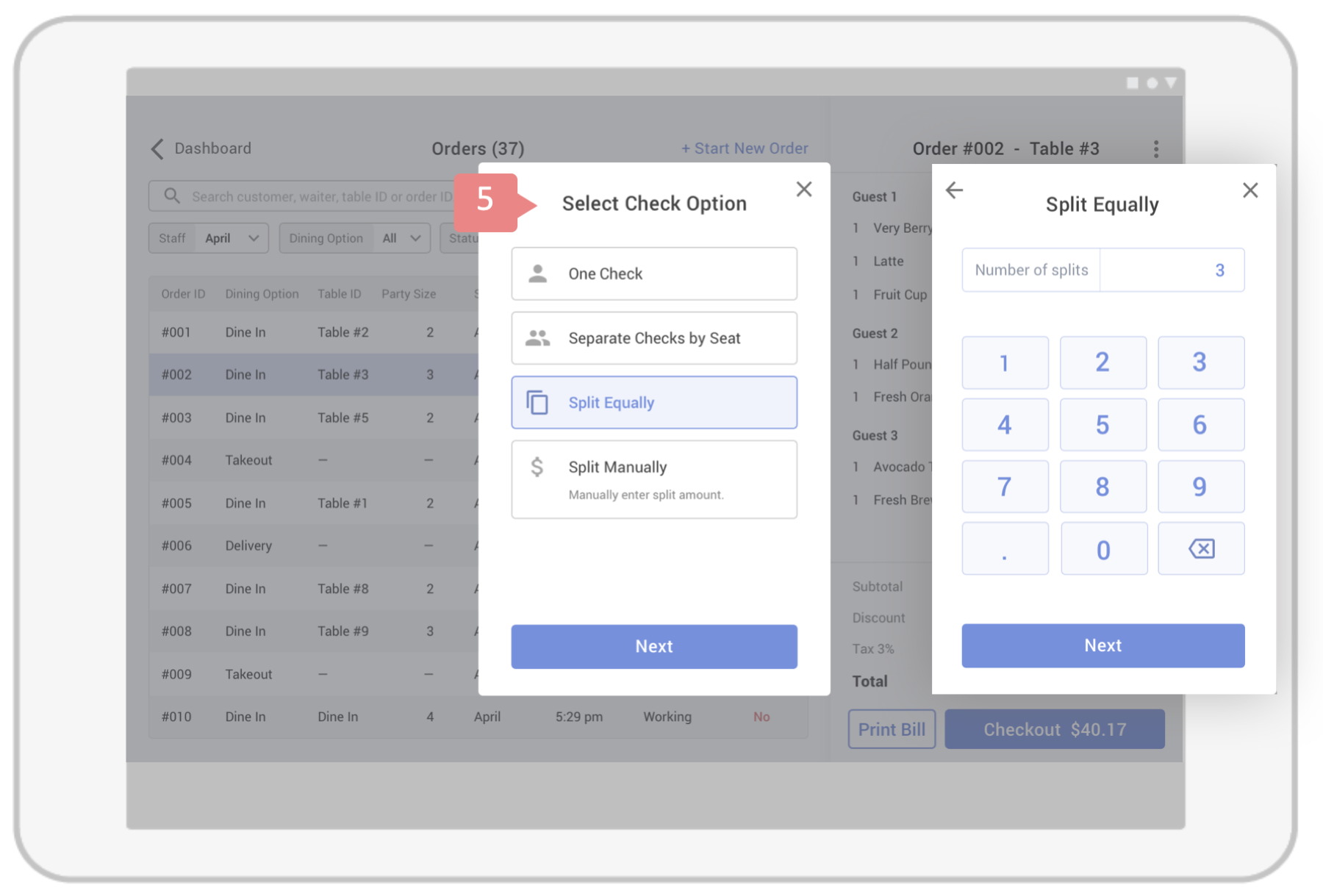
- Flexible way to split checks or pay as a single check. For splitting checks, guests can also choose split equally or split manually.
7. Case Study B
Design challenge
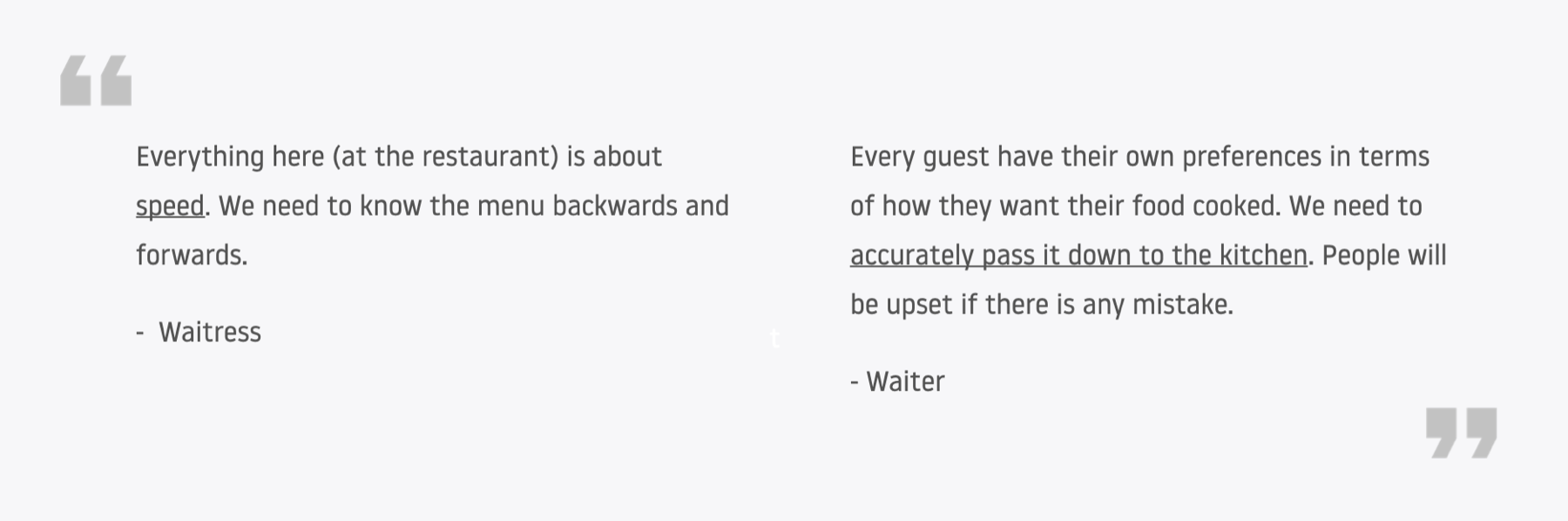
How might we enable waiters to do fast and accurate ordering?
Design strategy
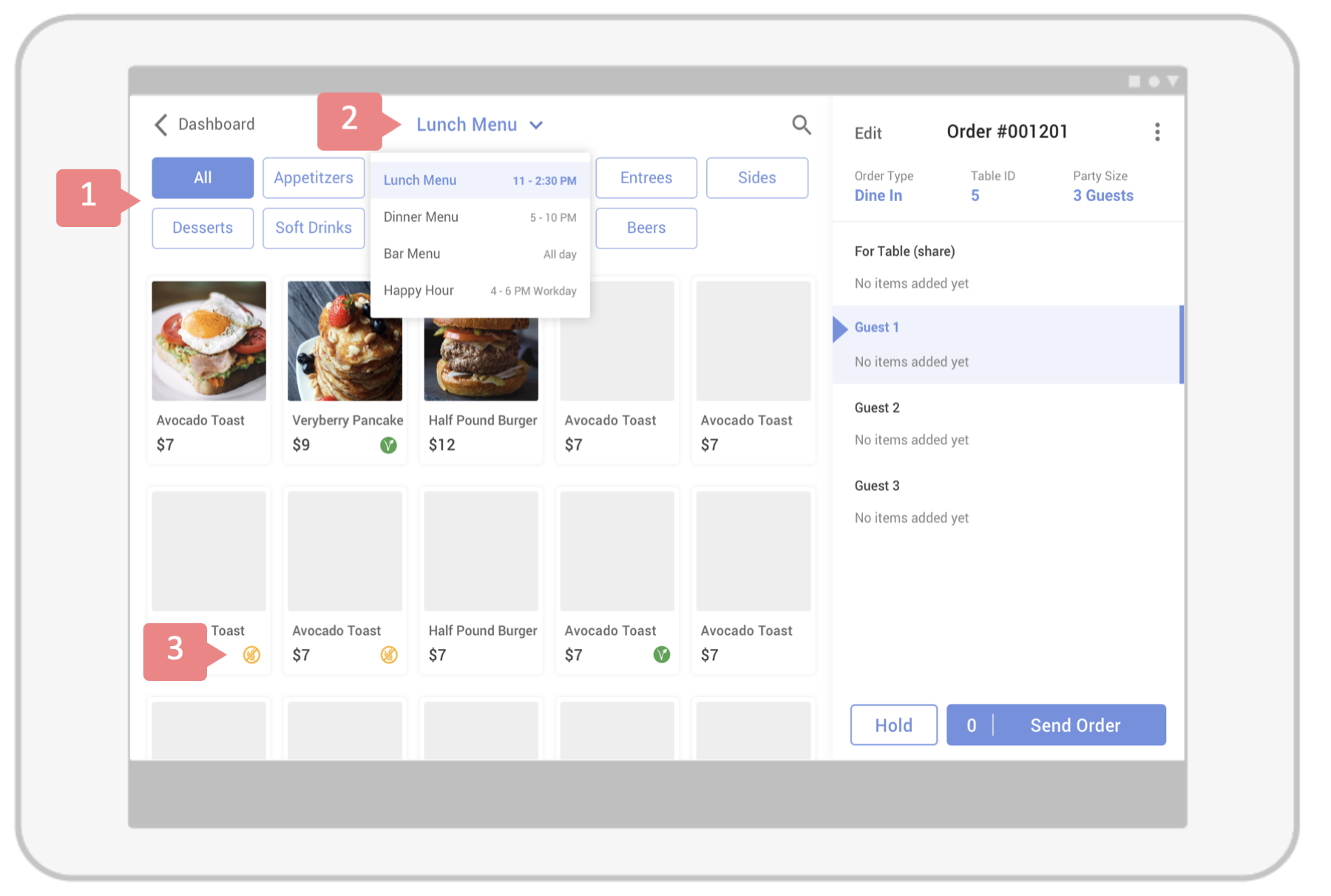
- Clear IA and visual layout for easy navigation. From the top to bottom of the screen, it shows menu -> category -> item.
- Reduce choices waiters have to make. For example, the POS will automatically pick the right menu based on what time it is.
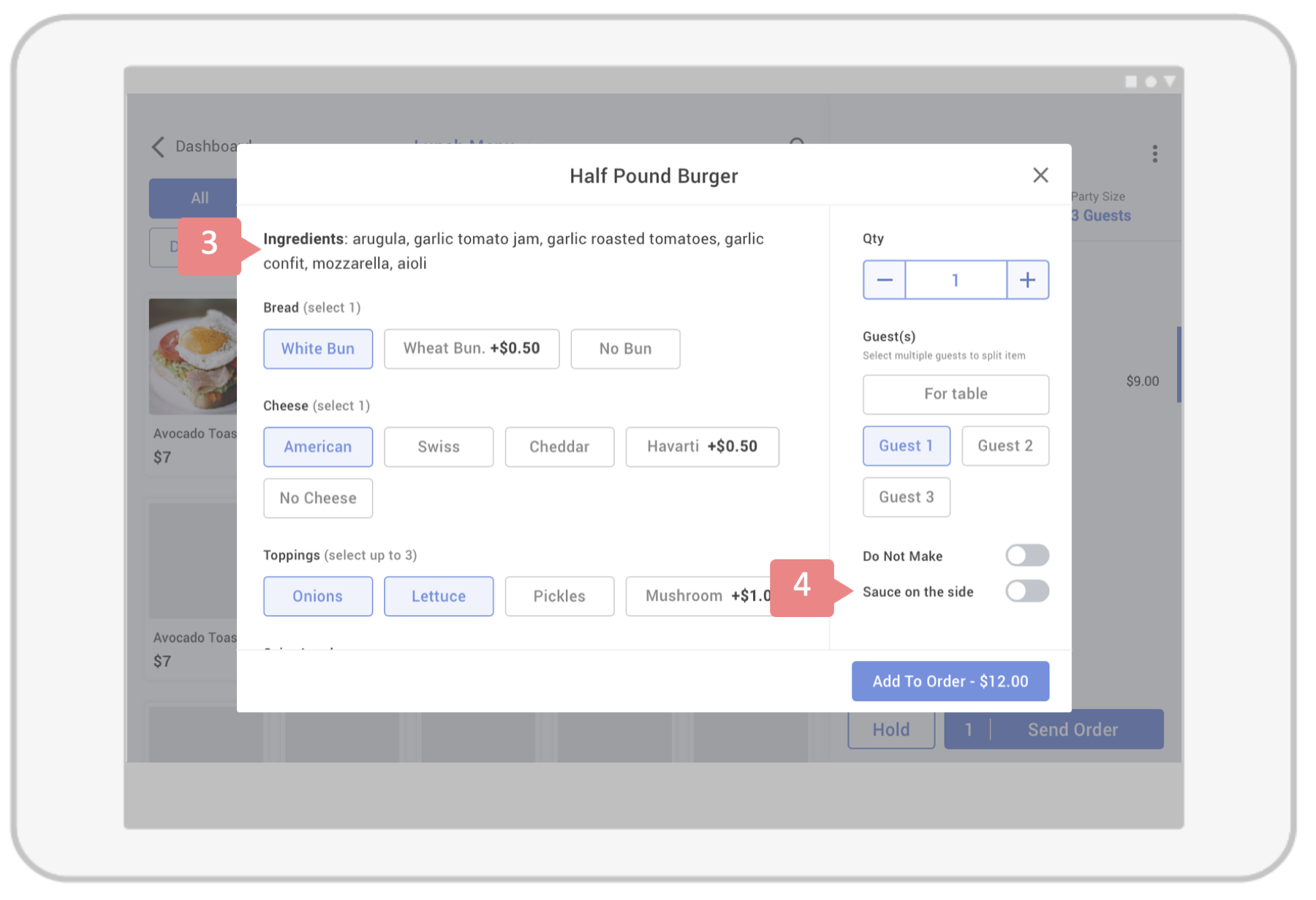
- Reduce things waiters have to remember. For example, visual indicator of vegetarian or gluten-free options. Besides, list out all ingredients for a dish, so waiters don't have to remember everything in their head.
- Capture and pass information accurately to the kitchen. For example, waiters can tell the kitech to put "Sauce on the side", if that's how the guest want for their salad.
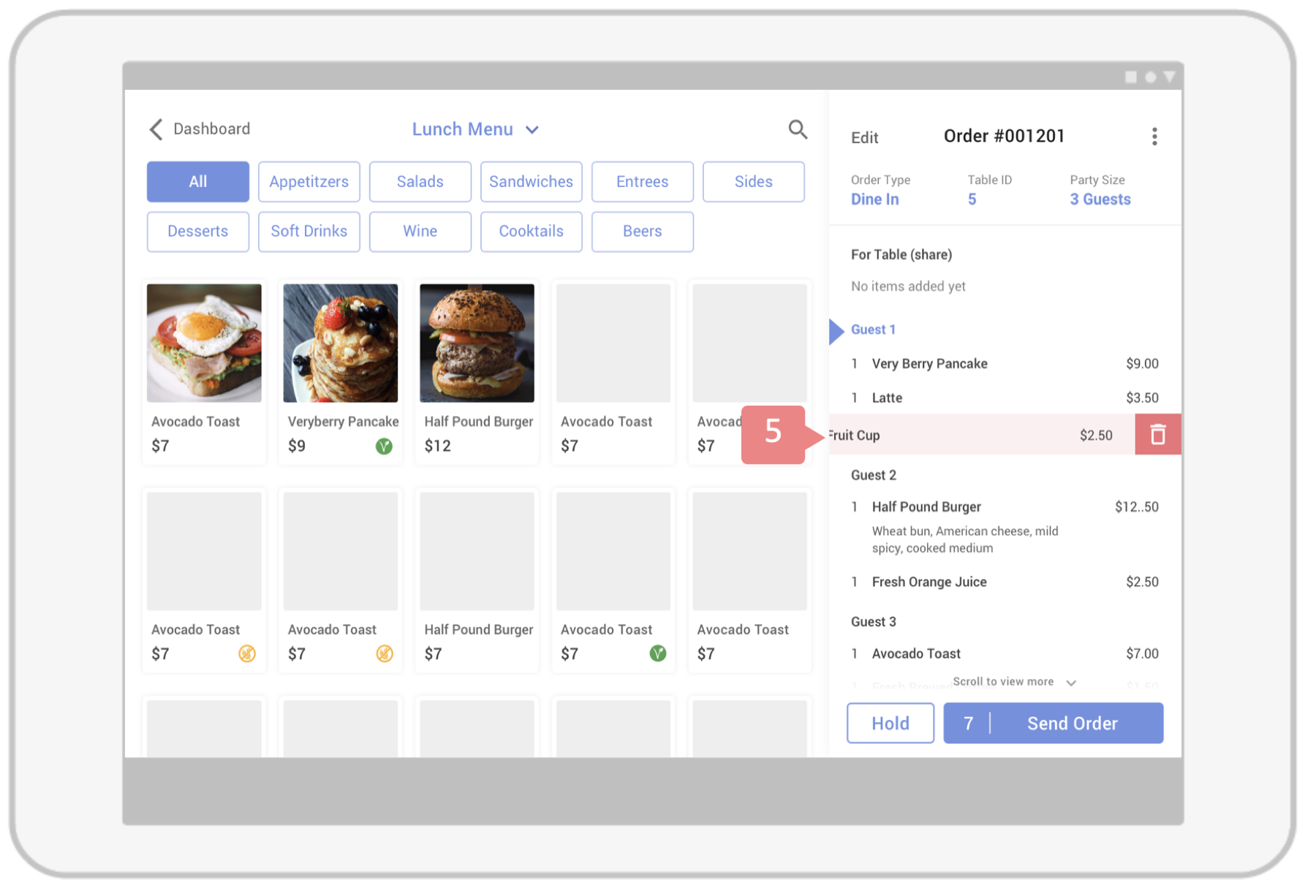
- Fast and easy error recovery. For example, if the waiter makes any mistake while placing the order, they can easily remove the item by swiping to the left.
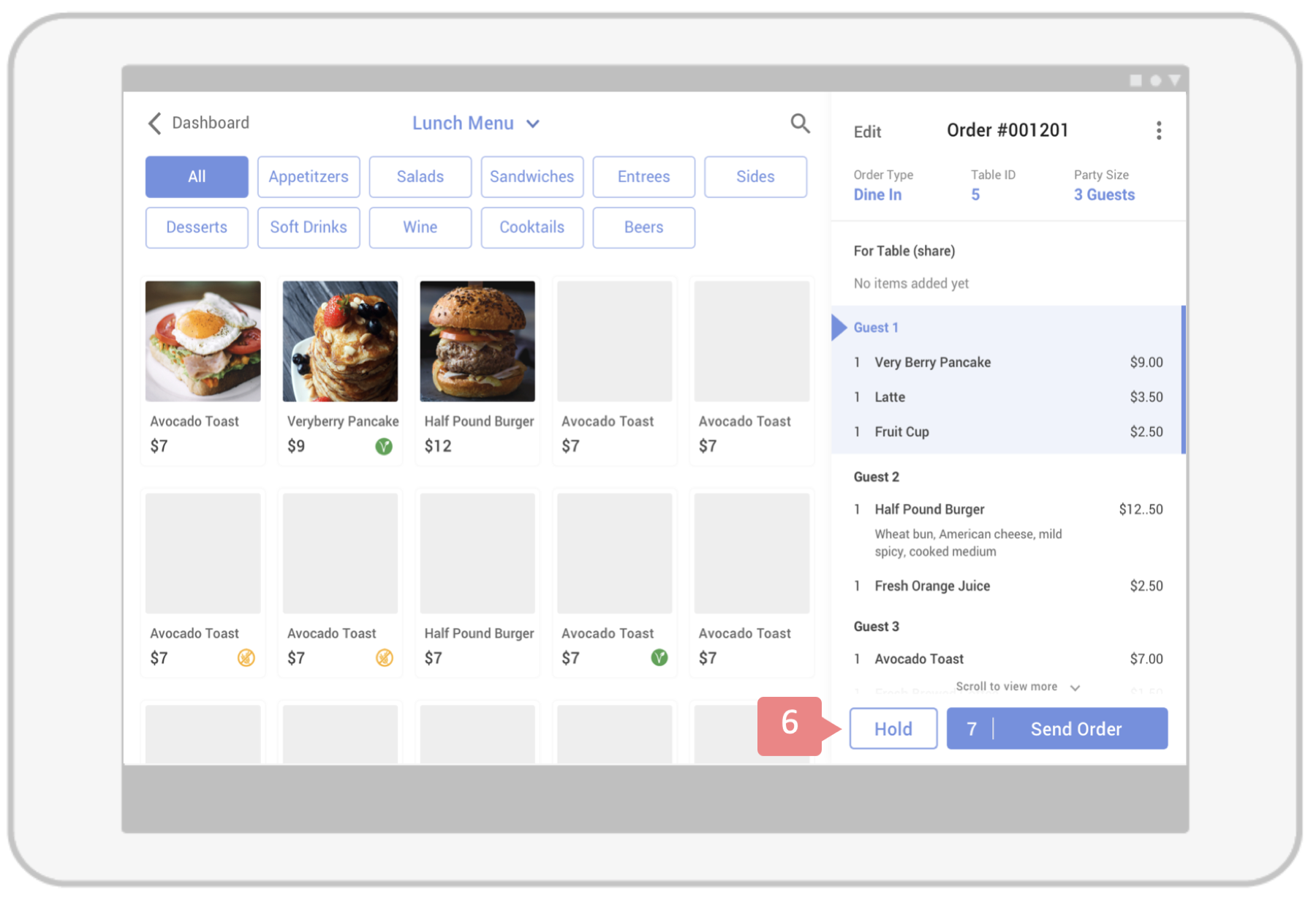
- "Hold" feature that allows waiters to pause anytime and resume where exactly they left off later. Since waiters are very likely to be interrupted while working on the POS, this feature allows them to step away immediately without worrying about losing any progress on the POS.
8. Impact & Contribution
By the time I left US Bank (Elavon. Inc), we had a working MVP, but the product has been launched to the public yet. Given this is a product we are building from scratch, I do not have data on the actual results. But as a lead researcher and designer, my biggest contribution include,
- Led user research to gain in-depth understanding of the customer experience ecosystem;
- Significantly contributed to the product strategy by translating research insights into a design vision;
- Worked through ambiguity with little guidance. Turned broad, conceptual ideas into tangible flows and experiences;
- Influenced how the team build the product - from building features to solving customer problems, from focusing on feature parity with competitor products to working backwards from our customers and design something they really need.
9. Areas to improve
Given that this is a MVP version, we were only able to cover fundamental POS features such as seating a table, taking order, applying discounts, checking out, but there are a lot more we can do in the future iterations. For example,
- Pay by phone experience: Instead of having to wait for waiters to take payments, what about guests can scan a code to pay for the bill on their phone whenever they are ready?
- Online ordering (or integration with food delivery services): How might we make the ordering system public facing so that guests can order online and pick up in store or get their food delivered?
- Different types of restaurants: A cafe and a fine dining restaurant take care of their customers in different ways, so how might our POS enable them to customize the solution to fit their work style?
- Different user person: In the MVP version, we only focused on the waiter experience. However, how might we design the product to meet the needs of the restaurant managers? Who needs to manage their employees, schedule shifts, monitor sales and inventory, etc.?